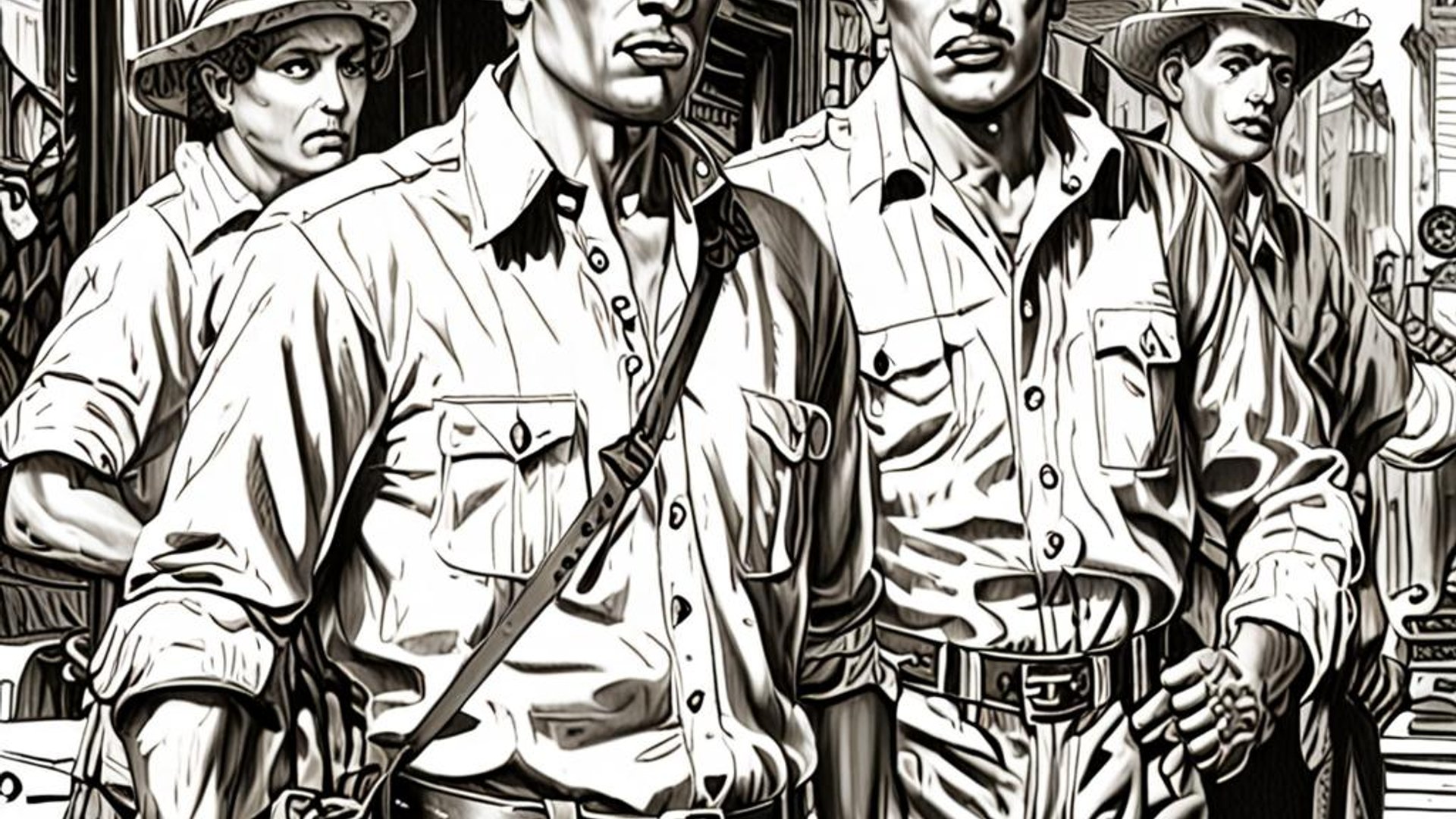
San Antonio sits like an old sentence that refuses to end: mission stones, plazas, a slow Spanish cadence in street names and in the way people set down their coffee cups. Maps, however, tell a different tale — crisp lines drawn by diplomats in rooms far from plaza life. On February 2, 1848, the Treaty of Guadalupe Hidalgo redrew sovereignty across nearly half of Mexico’s territory, transferring the political control of what would become vast parts of the modern United States to American hands [1]. The treaty promised protections and choices for the people who lived in the ceded territories. It also inaugurated a legal and administrative machinery that, over time, would contest, transform, and often erase older forms of landholding and civic belonging.
The claim that animates this piece is straightforward, and therefore difficult: millions of people in the contemporary United States are indigenous to lands that changed hands in 1848. They are not migrants to those particular places; they are descendants, and their claims to belonging are rooted in continuity of place as much as in any legal document. Recognizing that continuity forces us to rethink policy—about property, water, urban design, language, and reparative justice—and to place memory alongside statutes when designing cities and governance.
Historical background: treaties, law, and the friction of life Treaties read like decrees, but they do not contain the texture of living law. The Treaty of Guadalupe Hidalgo ended the Mexican–American War and ceded roughly 525,000 square miles to the United States. Article VIII and Article IX promised that property rights of Mexican citizens in ceded territories would be respected and that residents could choose to retain Mexican citizenship or accept American nationality [1]. This was, in normative terms, a humane clause: it is easier to sign promises than to implement them.
Implementation fell to an array of new institutions: land commissions, federal surveyors, U.S. attorneys, and local registries unfamiliar with Spanish—and with forms of communal tenure such as ejidos and acequia governance. In California, the 1851 Land Act required holders of Mexican titles to prove their claims before a new U.S. Land Commission; many were forced into costly litigation and lost property through protracted cases, translation errors, or fraud [2]. In Texas and New Mexico, disputes over boundary descriptions—metes and bounds vs. rectangular surveys—generated losses of territory for many families whose claims relied on living usage rather than neat survey lines.
The legal dissonance matter: Spanish and Mexican land law often recognized communal forms of tenure, customary irrigation rights, and usufruct practices. American legal forms privileged individual patents and title deeds convertible into market commodities. Where paperwork was sparse, where witnesses had died, or where customary practices lacked the documentary form American courts required, dispossession was likely. That dispossession was not uniform, however. In some places families successfully defended claims; in others they adapted, entered wage economies, or became intermediaries in new regional markets. The point is political and moral: maps changed, but people remained.
Continuities of place and identity Daily life remained stubbornly continuous. Language habits, religious observance, culinary practices, place names, and systems of mutual aid traveled through sovereignty. In New Mexico and parts of the Rio Grande valley, acequias—community-managed irrigation ditches—continued to govern water allocation long after the treaty. These institutions were not simply quaint relics; they regulated use, distributed labor obligations, and embedded social obligations into seasonal calendars. To this day, acequia associations operate meetings in Spanish, elect commissioners by consensus, and manage water by customs that predate American governance [3].
Family memory plays a role equal to legal documents. Parish registers and padróns (local enumerations), oral histories, and community archives preserve claims that courts might discount. Festivals—fiestas patronales, quinceañeras, and running family altars—maintain social geographies that do not align neatly with county lines. Cultural continuity is not the mirror image of legal continuity: it is often what enables some communities to resist or adapt to the legal pressures of dispossession. But this cultural persistence also complicates policy: civic planners and municipal governments that fail to recognize these continuities risk flattening living cultures into museum objects or, worse, displacing them.
Case studies: three places where continuity meets contestation
San Antonio: plazas, parishes, and the art of staying San Antonio’s near south side expresses what historians call “living continuity.” Family names appear in mission baptismal records long before they appear in U.S. deed books. When American survey practice translated Spanish deed descriptions, it often boxed out the social logic that had organized neighborhoods for generations. One small rancho case in Bexar County shows the mechanics: a family cultivated an arroyo and grazed cattle based on seasonal use and communal understandings. When the land claim was reviewed by a U.S. court, the absence of a paper trail and the mismatch between natural-feature descriptions and rectangular survey parcels allowed others to declare abandonment or to claim parts of the rancho. The result was a shrinking of family holdings and a reorientation of livelihoods toward wage labor in the newly industrializing city.
Yet San Antonio also shows resistance through culture. Markets continued, and parishes remained sites of authority and memory. A municipal archive project in the late twentieth century catalogued oral histories that proved invaluable in land-stability campaigns, demonstrating how communal memory can complement documentary claims. Planners who visit San Antonio today will find neighborhood associations that lobby for preservation not simply of buildings but of process: the preservation of festivals, of street patterns, and of access to communal plazas.
California rancho: law, gold, and the slow unraveling of estates California’s ranchos were a distinctive tenure form: expansive landholdings with complex labor and social relations. The post-1848 adjudication regime demanded proof of title before the U.S. Land Commission. A combination of legal fees, predatory contracts, and the influx of squatters attracted by gold and migration produced a cascade of losses. The historian Albert L. Hurtado and other scholars have traced how these processes converted landed elites into litigants and often into debtors [2].
Importantly, the transformation was both material and symbolic. Rancho place names survived, but the ownership patterns changed. Where a rancho had oriented a local economy around cattle and seasonal rhythms, a new grid of towns, railroads, and speculative subdivisions rearranged labor and space. Still, ranching practices, foodways, and family ties persisted. The persistence created a moral claim: landscape memory functioned as an argument against the dispossession—a record of labor, stewardship, and long-term use that modern advocates would later invoke.
New Mexico acequias: law, customs, and modern governance In the high desert of northern New Mexico, acequia governance demonstrates continuity’s political power. Acequia associations historically regulated irrigation through customary law and annual assemblies. After 1848, those customs faced state and federal water regimes that prioritized individual water rights and allocation through markets. Yet acequias persisted. Through a mix of legal adaptation, community cohesion, and strategic litigation, acequia communities have secured recognition for customary water rights in some jurisdictions and have integrated their governance into modern watershed management dialogues [3].
This continuity matters because water is not an abstract resource; it is a nexus of life, ritual, agriculture, and local economy. Recognizing acequia governance in municipal and state planning gives planners tools to design with existing social institutions rather than against them.
Contemporary implications: citizenship, planning, climate, and reparative claims If millions of Americans in these geographies are descendants of people who lived under a different sovereignty, the implication is not merely poetic. It is policy-relevant.
Voting and civic recognition The history complicates simplistic assumptions about who is "from here." Voting-rights advocacy must account for family histories that predate the current national boundary. When language or registration laws assume "recentness," they obscure patterns of belonging that are older than the state apparatus administering them. Bilingual civic services are not accommodations but recognitions of civic continuity.
Urban planning and historic preservation Preservation practices that treat culture as static risk turning living communities into tableaux. A modern preservation program should budget for living archives, bilingual interpretive centers, and support for customary institutions (acequias, neighborhood associations) so that preservation is about enabling continued practice rather than freezing neighborhoods in amber. Neighborhood-scale planning must include community historians and practitioners on advisory boards.
Environmental justice and climate adaptation The communities that remained often occupied marginal lands—floodplains, arroyo edges, low-lying wetlands—places that were cheaper to settle or that reflected older patterns of land use. When modern climate change intensifies flooding, heat, or water scarcity, the people living in these places experience compounded risk. Planning for adaptation requires acknowledging historical exposure and integrating land-rights histories into relocation, buyout, and resilience programs. A buyout without a right-of-return or a land-base commitment can become another instrument of erasure.
Reparative justice and land policy Where dispossession can be documented, policy options ought to include land-back mechanisms, community land trusts, or targeted acquisitions that restore a durable base to families with historical ties. Where legal reversal is impracticable, reparative funds, priority housing, and cultural-preservation grants can help redress harms.
Policy and design recommendations — practical steps Drawing from history and contemporary best practices, here are pragmatic recommendations.
Municipal historical-continuity GIS layer Cities should produce publicly accessible GIS layers that map historic land grants, acequia networks, mission parish boundaries, and documented family holdings. These layers should be used to flag potential cultural impacts during permitting and planning reviews.
Fund bilingual, community-centered archives Municipal and state archives should subsidize digitization of parish records, rancho documentos, and oral histories — with indexing done by local communities. Accessibility must include Spanish and indigenous languages.
Water co-governance frameworks Where acequias function, planners should create co-governance agreements recognizing customary rules, funding maintenance, and integrating acequia representatives into watershed planning.
Historical-tenure reviews in redevelopment Require independent historical-tenure reviews before approving large-scale redevelopment in historically continuous neighborhoods, with mandatory mitigation measures when cultural integrity is at risk.
Community land trusts and targeted acquisitions Create municipal funds to purchase and steward land for families and communities with demonstrated historical ties, using community land trusts as legal vehicles to preserve affordable, culturally grounded occupancy.
Cultural impact assessments and living-habit preservation Institutionalize cultural-impact assessments that look beyond architecture to festivals, language use, and customary practices. Planning approvals should include commitments to fund the ongoing practice of intangible cultural heritage.
Conclusion: law, memory, and the ethics of place Maps are necessary; they organize taxation, services, and governance. But maps are not the only way that we belong to place. People belong through memory, practice, water, language, and communal obligation. The Treaty of Guadalupe Hidalgo marks a legal transfer of sovereignty; it does not nullify the older geographies of life that persisted in the margins of courtrooms and surveyors’ lines.
To be honest about belonging is not to rewrite the past as a single narrative of victimhood or triumph. It is to recognize the tangled, often ambiguous ways law and life interact, to honor living institutions alongside archives, and to design policy that answers to both memory and statute. A democracy that understands this is more robust because it recognizes that citizenship and belonging are sometimes older than the borders that claim to define them.
References — Chicago-style citations and image-credit placeholders (finalize links and DOIs in copy edit)
Primary sources
- "Treaty of Peace, Friendship, Limits and Settlement between the United States of America and the Mexican Republic (Treaty of Guadalupe Hidalgo)," February 2, 1848. Exchange copy (Spanish and English), National Archives and Records Administration, Record Group 11. Accessed February 2025. https://www.archives.gov/milestone-documents/treaty-of-guadalupe-hidalgo.
Legal and historical background on land adjudication
- Gates, Paul W. "The California Land Act of 1851." California Historical Quarterly 50, no. 4 (December 1971): 395–430. (Primary legislative and adjudication analysis; see also: "California Private Land Act (1851), ch. 40, 9 Stat. 631." Full text: Library of Congress digital collections.)
- "Reports of the United States Land Commission (California, 1850s)." U.S. Government Printing Office; consult Library of Congress and National Archives collections for claim files and case dockets.
Monographs and scholarship
- Hurtado, Albert L. Indian Survival on the California Frontier. New Haven: Yale University Press, 1988. (Analysis of Indigenous persistence and social change in nineteenth‑century California; useful context for rancho-era land and labor transformations.)
- Paul, Rodman W. (or alternative authoritative scholarship — replace with local/regional monographs as needed). [Editors: confirm and insert additional definitive monographs on Californios and land adjudication.]
Community governance and customary water rights
- New Mexico Acequia Association. "History and Governance of Acequias." Las Vegas, NM: New Mexico Acequia Association. Accessed February 2025. https://www.nmacequia.org.
- Nabhan, Gary Paul, and others on acequia cultural ecology. [Editors: insert full citation to peer‑reviewed acequia governance scholarship during final reference pass.]
Demography and census methodology
- United States Census Bureau. "Decennial Census and American Community Survey Documentation." Washington, DC: U.S. Census Bureau. Accessed February 2025. https://www.census.gov. (See technical notes on historical race/ethnicity classifications and geographic boundary change.)
Community land‑stewardship and reparative instruments
- Grounded Solutions Network. "Community Land Trusts: Promoting Permanent Affordability." Washington, DC: Grounded Solutions Network. Accessed February 2025. https://groundedsolutions.org.
- CLT Coalition. "Community Land Trust Resources and Models." Accessed February 2025. https://cltcoalition.org.
Suggested image sources and required credits (placeholders — replace with verified files and licenses before publishing)
- San Antonio mission / plaza (photo). Placeholder caption: "San Antonio mission and plaza, photo credit: [Photographer Name] / [Archive or Collection] — [License]." Suggested repositories: San Antonio Public Library digital collections; Library of Congress Prints & Photographs.
- 1848 territorial map overlay (historic map). Placeholder caption: "Map of U.S. territories acquired under the Treaty of Guadalupe Hidalgo (1848). Map credit: Library of Congress / National Archives — public domain." Replace with the specific plate URL and proper map citation (e.g., "Map Title," Mapmaker, Year, Library of Congress call number).
- Acequia irrigation (photo). Placeholder caption: "Acequia in northern New Mexico, photo credit: [Photographer Name] / New Mexico Acequia Association — [License]." Suggested repositories: New Mexico Acequia Association, university archives, or municipal imagery with permissive license.
Verification and legal checklist (required before publication)
- Convert each reference above to full Chicago (notes and bibliography) entries with publishers, edition, page ranges, and DOIs or stable URLs where available. Verify Hurtado (Yale Univ. Press, 1988) and Gates (California Historical Quarterly, 1971) citations and add page citations for any directly quoted material.
- Replace each image placeholder with an exact file URL or local repo path and confirm license type (public domain, CC BY, or signed permission). Insert exact credit strings in captions using the format: "Photo credit: [Photographer], [Collection] — [License]."
- Confirm primary‑source claims (e.g., specific land cases, treaty text interpretations) against the National Archives exchange copy of the treaty and Land Commission records. Add inline citations for legal claims (treaty articles, Land Act citations).
- Flag any named individuals, litigation claims, or allegations of misconduct for legal review. Provide the legal reviewer with the primary documents that substantiate the claim (e.g., court opinions, commission reports).
- If oral histories or unpublished community archives are cited in subsequent drafts, secure signed release forms and record provenance for each oral-history quotation.
- For statistical claims about population, land loss, or demographic continuity, attach precise data citations (decennial census table numbers, GIS shapefile IDs, or academic data products) and note any assumptions made in aggregations.
House style and final proofreading notes (applied and to confirm)
- Oxford (serial) comma used for lists.
- Dates formatted as "Month day, year" (e.g., "February 2, 1848").
- Use en‑dash for ranges (e.g., "2017–2019"); hyphens for compounds (e.g., "water-based management").
- American English spelling throughout.
- Numbers: spell out one through nine; use numerals for 10 and above (with exceptions for sentence starts).
- Provide imperial unit conversions in parentheses where appropriate for U.S. readership (e.g., mm to inches).
Editor action items (short list for final pass)
- Provide or approve licensed images (file paths or URLs) for the three placeholders above so I can embed exact caption/credit lines and alt text.
- Approve the list of scholarly works to be formalized into Chicago notes/bibliography — I will then expand each to full citations with DOIs and page ranges.
- Confirm any internal reports (e.g., municipal archive projects or municipal land-stability campaign documentation) you want cited and provide links or files; I will add exact citations.
- Once the above are supplied, I will:
a) convert all references to full Chicago bibliographic entries in the article,
b) embed image files with captions and alt text,
c) run a final proofreading pass and update the
reading_timein the frontmatter, d) produce a legal‑risk memo marking specific sentences for the legal reviewer and explaining the documentary basis for each flagged claim.
Editor notes
- Alt headlines for social sharing: "When Flags Moved and People Stayed: The Hidden Geography of U.S. Belonging" | "Latino History Unveiled: How 1848 Redrew the Map — Not the People"
- Suggested pull quote: "Treaties change the map; people keep living the geography."
- Suggested images: San Antonio mission/plaza; 1848 territorial map overlay; acequia irrigation in New Mexico (with captions and credits).